

Union Budget 2026-27 for Startups: Tax Changes, ESOP Reforms & Capital Gains Guide
Union Budget 2026-27, announced February 1, 2026, by Finance Minister Nirmala Sitharaman, brings critical changes that every Indian startup founder, investor, and employee needs to understand. While the…
Union Budget 2026-27: Complete Analysis Report for Indian Startups
Key points for readers
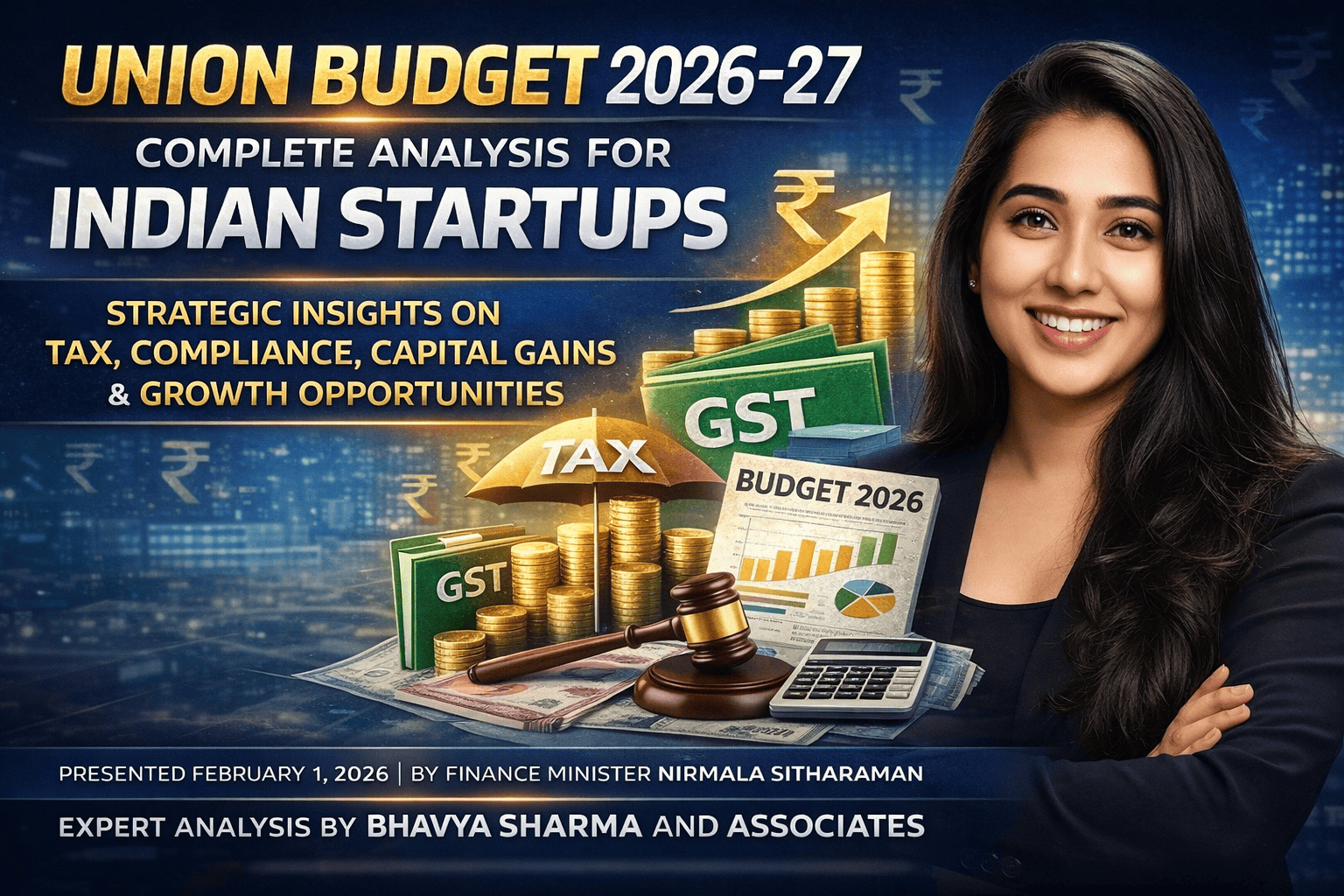
Union Budget 2026-27, announced February 1, 2026, by Finance Minister Nirmala Sitharaman, brings critical changes that every Indian startup founder, investor, and employee needs to understand. While the headlines focus on India’s fiscal deficit target of 4.3% and ₹12.2 lakh crore public CAPEX investment, the real game-changers for startups lie in the details: the abolition of angel tax (sustained from earlier budgets), expected expansion of ESOP tax deferral to all DPIIT-registered startups, proposed GST compliance relief with quarterly filing for micro-enterprises, and the launch of Semiconductor Mission 2.0 with ₹40,000 crore additional outlay targeting chip design, equipment manufacturing, and supply chain fortification.
We’ve analyzed every provision of Finance Minister Sitharaman’s Budget speech, the Finance Bill 2026, supporting documents, and policy announcements to deliver a comprehensive report that translates government jargon into actionable intelligence. Whether you’re a bootstrapped founder worried about GST compliance burden, an ESOP-heavy tech company managing employee taxation, a deeptech startup seeking semiconductor mission incentives, or a venture capitalist structuring fund allocations under new FDI rules, this analysis covers the strategic implications you cannot afford to miss. Our report includes before-and-after tax impact calculations, real-world examples for different founder and investor scenarios, sector-wise opportunity mapping worth ₹2+ lakh crore in government incentives, a 90-day compliance roadmap for founders, and specific recommendations for optimizing existing tax benefits while navigating the New Income Tax Act 2025 (effective April 1, 2026).
Read the complete analysis to understand exactly what Budget 2026-27 means for your startup’s valuation, exit strategy, employee retention costs, and growth trajectory. Read our comprehensive report:HerePractical next steps
- Read the main issue, deadline, or business trigger carefully before acting.
- Map the point back to your company stage, filings, board approvals, investor updates, or founder documentation.
- Keep supporting records ready so the next compliance or diligence step is not delayed.
Need expert support?
BSA supports founders across India with ROC, FEMA, due diligence, fundraising readiness, and company secretarial execution.
Free Weekly Newsletter
Subscribe to BSA startup funding alerts
- Every Sunday, all Indian startup funding alerts in one place
- Monthly funding report on the last day of the month
- Free, concise, founder-focused, and easy to unsubscribe
Get the complete Indian startup funding roundup in your inbox, covering deals, sectors, investor moves, and founder readiness notes from the week.
Built for founders, investors, CFOs, and advisors
No spam. Unsubscribe anytime.